ZeroNode is a technical advisory boutique developing tools that align datacenter growth with grid capacity — enabling shared insight between utility planners and datacenter operators.
Evidence is clear — from AWS’s 960 MW campus beside Susquehanna to Microsoft’s plan to restart Three Mile Island. The chart below shows datacenters overrunning the grid.
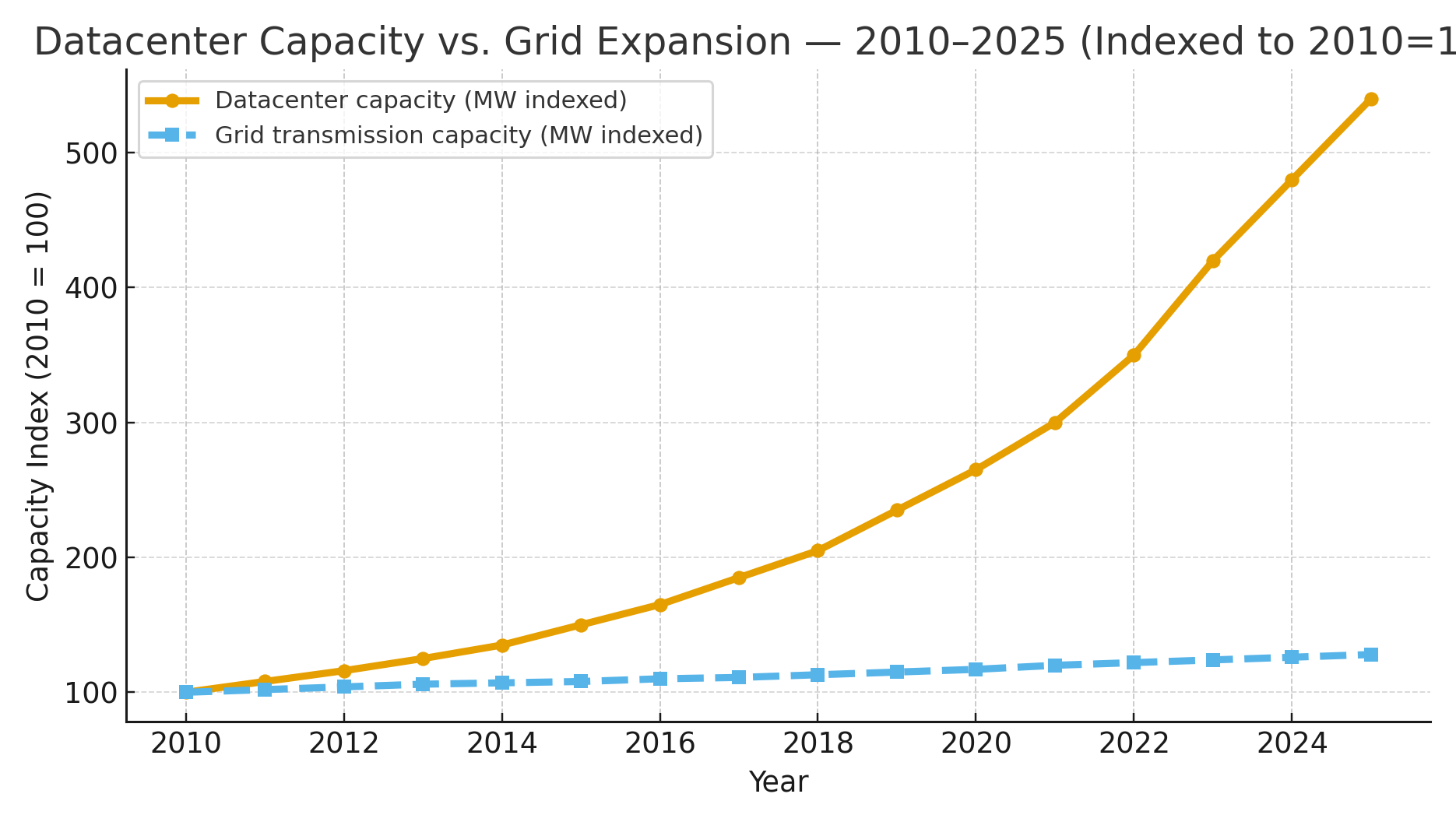
And the gap is widening...
Datacenter build time
Source: IEA Electricity Market Report 2024
Build new grid capacity
Industry filings
In Pennsylvania, residential electricity prices have climbed nearly 42% in five years — from 13.9¢ to 19.7¢/kWh.
The surge tracks AI-driven datacenter growth that’s consuming capacity faster than the grid can expand.
The chart below shows this trend, with a sharp rise through June 2025.

Real-time, geo-aware intelligence for grid–compute alignment.
Open DevNet simulation engine for grid–compute energy alignment.
Connect with us to give our energy modeling tool chain a try,
or...
Explore the open-source code on which ZeroNode DevNet Engine is built.
ZeroNode hypothesis:
The path to a resilient grid lies not in limitless capacity but in intelligent coordination —
where datacenters, storage, and supply operate as one adaptive system.
Welcome to ZeroNode.
ZeroNode envisions datacenters evolving from passive consumers of electricity to active, transparent nodes that collaborate with the grid.
AI and cloud growth are accelerating far faster than transmission build-outs, stressing local substations and driving reactive grid upgrades. ZeroNode makes that strain visible — linking compute expansion with grid readiness in real time.
The idea is simple: turn every large digital load into a zero-impact node — optimized, measurable, and part of the solution.
From consumption node → coordination node → ZeroNode.
References